
Gaelic
Most Popular Gaelic Language Product Types
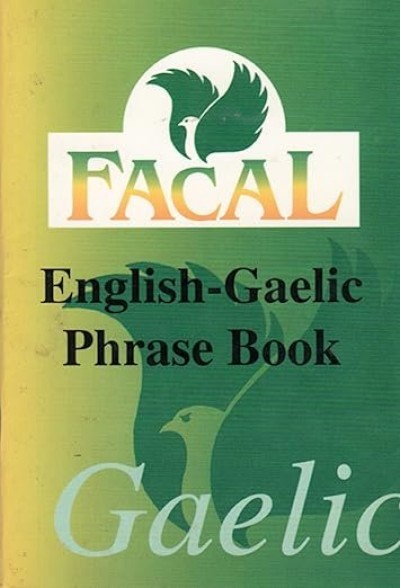
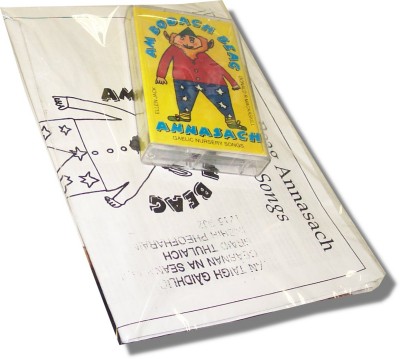
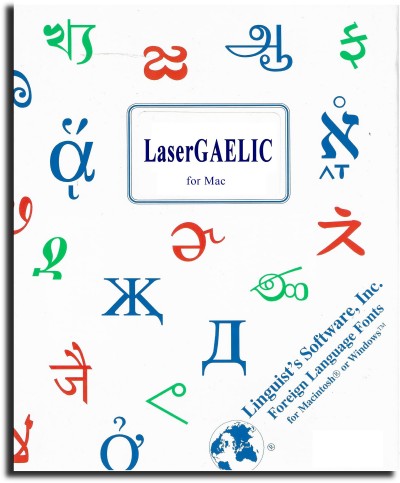
All Gaelic language product types
Language Information
Irish Gaelic, often known simply as Irish, is an official language of the Republic of Ireland. Although spoken by only one million people, or about one-third of the population, its use has been strongly encouraged by the government and it is taught in all Irish schools. The traditional Gaelic alphabet, the first of the two samples below, was evolved from the Latin about the 5th century. it contains only five vowels and thirteen consonants-the letters i, k, q, v, ~ x, j~, and z are missing. An acute accent over a vowel indicates that it should be pronounced long, where a single dot over a consonant indicates that it should be aspirated. Nowadays Gaelic is generally written in modern English characters. In the new orthography the dot was dropped and the letter h placed after the consonant instead (e.g., ç became ch).
About the 5th century Gaelic was carried from Ireland to Scotland. With the passage of time the Scottish variety diverged to the point where it was clearly a separate dialect. Unlike Irish Gaelic, however, Scotti~h Gaelic has no official status and is spoken by only 75,000 people, or l ½ percent of the population of Scotland. Scottish Gaelic frequently uses a grave accent where Jrish uses an acute.
English words of Gaelic origin include hard, glen, bog, slogan, whiskey, blarney, shillelagh, shamrock, colleen, brogoc, and galore. Specifically Scottish Gaelic are clan, loch, and ptarmiigan.
- Language Family
- Indo-European
- Subgroup
- Celtic
- Branch
- Goidelic
Gaelic Language Sample
Universal Declaration of Human Rights, Article 1
Gaelic, Scottish
Tha gach uile dhuine air a bhreth saor agus co-ionnan ann an urram 's ann an còirichean. Tha iad air am breth le reusan is le cogais agus mar sin bu chòir dhaibh a bhith beò nam measg fhein ann an spiorad bràthaireil,English translation
All human beings are born free and equal in dignity and rights. They are endowed with reason and conscience and should act towards one another in a spirit of brotherhood.
Source: OHCHR translations of the Universal Declaration of Human Rights